
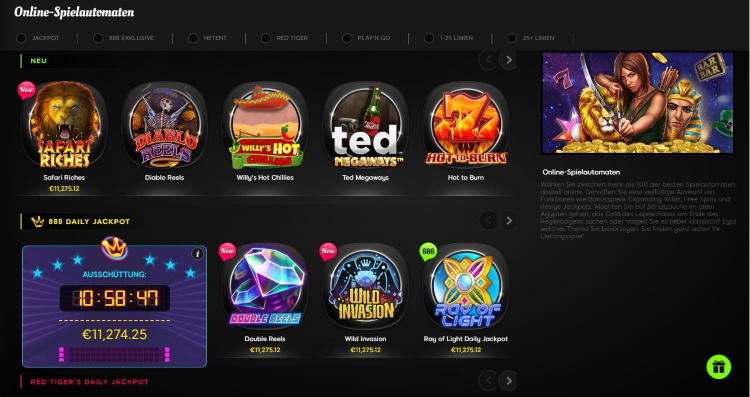
As you settle in to play roulette, play a slot, or participate in a live blackjack table at an online casino, you are putting trust in a system you cannot physically touch. That trust does not have to be blind. At ιστοσελίδα παιχνιδιών καζίνο 888 Casino, we have built our entire operation around verifiable fairness, and we believe every player should understand exactly how that works before they place a single wager. This guide walks you through the concrete methods, technologies, and regulatory frameworks that separate genuinely fair online casinos from the rest. We will explain what randomness means in a digital world, how independent testing laboratories audit our games, why licensing jurisdiction matters, and what you can check on your own to verify that the games you play give you the honest odds you deserve. Fairness is not a marketing slogan. It is a technical, measurable, and auditable reality.
Deciphering Random Number Generation in Virtual Games
Every spin of a digital slot, every card drawn in virtual blackjack, and every toss of the dice in an online table game commences with a piece of mathematics known as a Random Number Generator, or RNG. An RNG does not represent a simple shuffle routine or a pre-programmed sequence of outcomes. It is a sophisticated algorithm that produces a completely unpredictable string of numbers thousands of times per second, even when no one is playing. The moment you hit the spin button, the game grabs the most recent number from that endless stream and transforms it into a game result. The critical distinction rests between pseudo-random number generators, which use a seed value and complex formulas to simulate randomness, and true random number generators that draw entropy from physical phenomena. Reputable online casinos, including our platform, use cryptographically secure pseudo-random generators that have been verified to produce statistically indistinguishable results from true randomness over millions of simulated rounds.
The practical implication of a properly functioning RNG is that each game round exists in complete isolation. Your chances of landing a specific slot combination on spin number one thousand are mathematically identical to your chances on spin number one. The machine does not heat up, it does not become cold, and it certainly does not know that you are one symbol away from a jackpot. This independence is what makes fairness testing possible. Auditors execute billions of simulated game rounds through the RNG and compare the distribution of outcomes against the mathematically expected distribution. If a European roulette game is fair, the number 17 should appear approximately once every 37 spins over an enormous sample. Minor deviations are normal; systematic biases are disqualifying. At 888 Casino, every virtual game you play hinges on RNG technology that has undergone exactly this level of scrutiny, and the certificates demonstrating that are available for you to inspect.
Live Casino Integrity and Live Dealer Supervision
Live casino games present a completely distinct set of fairness factors because they replace algorithmic outcomes with actual cards, real roulette wheels, and human dealers. At 888 Casino, our live dealer studio transmits professional croupiers dealing actual decks of cards and spinning actual wheels in real time. The fairness mechanism here transitions from RNG certification to process integrity and optical verification. Multiple high-definition cameras capture every angle of the table, erasing the possibility of sleight-of-hand manipulation that might occur in a physical casino where your view is limited to a single perspective. You can watch the dealer shuffle the cards, you can see the roulette ball drop into the numbered pocket, and you can check the result with your own eyes. This optical transparency is the first layer of live casino fairness, but it is not the exclusive one.
Behind the cameras, live casino operations are susceptible to rigorous procedural controls. The cards employed in live blackjack and baccarat games are changed at regular intervals, often after a single shoe or a limited number of shoes, and the used decks are either discarded or securely archived to prevent re-introduction into play. The roulette wheels undergo periodic laser calibration checks to guarantee that no physical deformations, warps, or imbalances have developed that might skew certain numbers over others. Pit bosses and surveillance personnel monitor the live streams continuously, not just for player disputes but also for any dealer behavior that strays from protocol. Additionally, the streaming technology itself is examined to verify that the video feed is genuinely live and not a delayed or pre-recorded sequence. At our tables, you will sometimes observe the dealer pause to respond to a player chat message or wait for a late bet placement decision, a small interaction that affirms the reality and immediacy of the game. You are viewing a real person deal real cards, susceptible to the same physical randomness that regulates casino floors around the world.
RTP Percentages and Casino Advantage Explained
Every casino game ever created features a mathematical advantage that ensures the operator continues to be profitable over the long term. This concept is captured by two connected metrics: Return to Player, or RTP, and house edge. RTP expresses the percentage of total wagers that a game is set to return to players over its lifetime, typically measured across millions or billions of rounds. If a slot game advertises a 96% RTP, that indicates the game will retain roughly 4% of every unit wagered as gross profit for the casino over its lifespan. The house edge is merely the flip side of that coin: a 4% house advantage. Importantly, these statistics describe long-run mathematical expectation, not short-term session outcomes. A game with a 96% RTP can certainly pay out 200% of a single player’s deposit in one evening while still keeping its programmed long-term return across all players.
What makes RTP a fairness metric rather than simply a profitability metric is the requirement for transparency. At 888 Casino, you can find the specific RTP for each slot and virtual table game, often included directly in the game’s information panel or help file. This lets you to make informed decisions about which games to play. You will see that different game categories group around different RTP ranges. Classic table games like blackjack, when played with perfect basic strategy, can deliver RTPs exceeding 99.5%, which is why we strongly feature multiple blackjack variants. European roulette, with its single zero, offers 97.3%, while American roulette with its additional double zero drops to 94.74%. Slot RTPs usually range from 94% to 98%, with progressive jackpot slots often lying at the lower end of that range because a portion of each wager goes into the jackpot pool. Understanding these differences changes you from a passive participant into an informed player who can choose games aligned with your personal risk preferences.
The Function of Independent Testing Laboratories
An online casino cannot merely state its games fair and assume players to accept that statement without proof. The entire integrity of the industry relies on the shoulders of autonomous testing facilities, expert third-party organizations that maintain no financial relationship with the casinos aside from the impartial verification services they provide. These laboratories hire mathematicians, software engineers, and security specialists who tear games apart at the code level. They inspect the RNG algorithm, they perform billions of simulated rounds, and they verify that the Return to Player percentages listed for each game correspond to the actual behavior of the software. The most prominent names in this field comprise eCOGRA, iTech Labs, GLI (Gaming Laboratories International), and BMM Testlabs. Each of these organizations keeps accreditation from national and international standards bodies, and their seals of approval bear true importance because their business model is based wholly on maintaining impeccable reputations for impartiality.
What occurs during a typical game audit extends well beyond basic RNG verification. The testing team obtains the complete source code of a game and all server-side components that influence outcomes. They confirm that the game cannot be tampered with by either the casino operator or the player. They test for something called “scalability of randomness,” signifying that the RNG does not weaken or become predictable when processing the massive transaction volumes that a busy casino handles. They also perform what is known as a “jackpot trigger verification,” validating that when a progressive jackpot is meant to activate at a specific probability threshold, the software truly fires at that threshold. The product of all this work is a formal certification document, often many pages long, that you can typically access from a clickable seal at the bottom of a casino homepage. We provide access to these certificates precisely because we have nothing to hide.
Licensing Jurisdictions and What They Truly Enforce
Few gambling licenses are created equal, and grasping the hierarchy of regulatory bodies is one of the most effective tools on offer to any player researching fairness. A license represents a legal compact between the casino operator and a government authority. That authority establishes rules, collects fees, probes complaints, and has the power to impose fines or withdraw the license entirely if the operator neglects to meet its obligations. The most strict jurisdictions, such as the United Kingdom Gambling Commission and the Malta Gaming Authority, conduct multi-year background investigations before granting a new license and keep up ongoing supervision that includes mystery shopping, financial audits, and direct technical testing. These regulators mandate operators to isolate player funds from operational funds, meaning your deposited balance is unable to be used to settle the electricity bill or finance a marketing campaign. That structural protection is a fundamental component of fairness that many new players neglect.
The license from Gibraltar, where 888 Casino has maintained a long-established presence, enforces similarly rigorous standards. Regulators in these top-tier jurisdictions mandate that all game software must be checked by an accredited laboratory before launch, and any subsequent modification to the game logic requires re-certification. They also enforce strict rules around advertising and bonus terms, guaranteeing that the offers you find on the homepage accurately mirror the terms you will actually encounter when you attempt to withdraw winnings. Lower-tier licenses from jurisdictions with scarce resources or minimal enforcement capabilities provide far weaker player protections. A casino running solely under a Curacao license, for example, experiences significantly less oversight regarding game fairness testing and fund segregation. When we guide you to our licensing information, we are steering you toward a regulatory framework that genuinely restricts what we can and cannot do with the games and with your money. The license is your safeguard.
Payment Operations, KYC Verification, and Money Protection
Fairness extends well beyond the game outcomes themselves. A casino could present perfectly random games and still operate unfairly by denying to pay legitimate winnings, setting hidden withdrawal barriers, or failing to protect player funds. This is why payment system honesty and Know Your Customer verification procedures are crucial components of a full fairness assessment. At 888 Casino, we support a comprehensive range of deposit and withdrawal methods tailored to our Greek market, including major credit and debit cards, leading e-wallet solutions such as PayPal and Skrill, direct bank transfers, and prepaid voucher systems like Paysafecard. Each method carries its own typical processing window: e-wallet withdrawals are often finished within 24 hours once the account has been fully verified, while card withdrawals and bank transfers may take between three and five business days relying on the intermediary banking networks involved. We publish these expected timeframes clearly because we know that delays generate suspicion, and suspicion undermines the trust on which our business depends.
The KYC verification process, which necessitates you to submit proof of identity, proof of address, and sometimes proof of payment method ownership, is often regarded by players as an inconvenience. We want to reframe that outlook. KYC is a legal obligation placed by our licensing regime and anti-money laundering regulations, but it also functions as a critical fairness safeguard for players. Verification assures that payouts go to the rightful account holder and not to a fraudster who has gained unauthorized access. It blocks underage gambling by confirming date of birth against an official government document. It also stops self-excluded individuals from creating new accounts and avoiding the responsible gambling controls they have already enabled. The documentation you provide is encrypted, stored on secure servers with strictly limited access permissions, and processed within the data protection framework required by European GDPR regulations. A casino that skimps on KYC is a casino that is likely being negligent elsewhere. We take document review seriously because the honesty of our payment ecosystem is indivisible from the soundness of our games.
Actionable Methods to Check Casino Fairness On Your Own
Learning about fairness concepts is beneficial, but the actual value comes from using that knowledge to conduct your own fairness checks on any online casino you think about joining. We urge you to put 888 Casino and our competitors through exactly these steps, because a brand that encourages examination is a brand that can endure it. This checklist offers you a solid, practical framework that requires no technical expertise, just a organized approach and a readiness to dedicate fifteen minutes searching in the right places before you make a deposit. Each point on this list aligns with a checkable piece of evidence that is either present or is missing. There is no ambiguity. If a casino cannot produce a specific item, that failure tells you something significant about its operational priorities.
Start by finding the licensing information, which should be displayed on the homepage, typically in the footer. Don’t just note that a license number is displayed; access the regulator’s official website and employ their license verification tool to ensure that the number aligns with the correct operator and that the license is still in force rather than revoked or void. Afterward, find the testing laboratory seal. Select it. That selection should lead you to a hosted page on the laboratory’s own domain—not a casino-hosted page—displaying the valid certification. Check the certification date to make sure it is current. After that, access the banking or payments page and identify the stated withdrawal processing times for your preferred payment method. Read the terms and conditions section related to withdrawals to understand any wagering requirements or documentation thresholds that are applicable before a cash-out is authorized. Then, launch several games across different categories and find the RTP information, whether in the game rules or the help menu. Check that the numbers match typical ranges for that game type. Finally, test the customer support responsiveness by sending a specific question about game fairness or withdrawal procedures and tracking the time it requires to receive a substantive, non-template answer. A casino that meets all of these checks has earned your consideration.
- Locate the license number in the website footer, then separately verify its validity on the regulator’s official public register. A displayed number means nothing if the regulator does not confirm it.
- Locate the independent testing laboratory seal, click through to the actual certificate hosted on the lab’s domain, and check the issuance date to confirm ongoing validation.
- Review the withdrawal policy in full, noting processing timeframes, minimum and maximum limits, and any documentation requirements that apply before your first cash-out.
- Check the information panels on at least three different game types—a slot, a table game, and a live dealer game—and confirm that RTP percentages or house rules are clearly published and fall within industry norms.
- Submit a specific, non-generic question to customer support about a fairness-related topic and evaluate whether you receive a knowledgeable, timely response or a vague script.
These validation procedures are not a single exercise. The digital landscape evolves, licensing status can alter, and certification renewals are regular. We advise repeating the license and certification checks every few months, notably if you keep an active balance. A casino that was fully compliant in January might have let its testing lapse by June, and you would have no way of knowing unless you looked. This self-directed vigilance converts you from a passive consumer into an active participant in the regulatory ecosystem. When players demand evidence, operators must supply it. When players stop checking, the incentive for rigorous compliance weakens. By taking these steps, you are not just protecting your own funds; you are reinforcing the standards that keep the entire industry honest. At 888 Casino, we welcome this scrutiny because the certificates, the license, the published RTPs, and the transparent payment policies all point toward the same conclusion: the games are fair, the outcomes are random, and the commitments we make are the commitments we keep.